Published

Understanding U-Values

Choosing the right glass doors and windows can make a huge difference in how comfortable and efficient your home is. One key measure of a door or window’s energy efficiency is its U-value. But what are U-values?

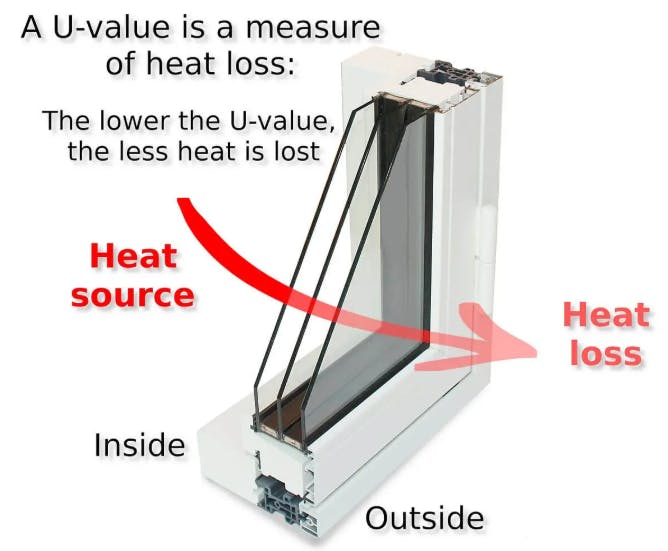
U-values are the secret to keeping your home warm in the winter, cool in the summer, and lighter on energy costs all year long. A U-value is a simple way to gauge how well your glass doors and windows transfer heat between the indoors and outside.

At Solarlux by Reveal, we can help homeowners select the most energy-efficient products for their homes. This article will explore how you can leverage U-values to create a home that works smarter for you.

U-Values Explained

A U-value, also called thermal transmittance, measures how much heat passes through a material or structure. This measurement can be applied to building components like windows, doors, walls, roofs, and floors.

A U-value is determined by calculating the rate of energy transfer through one square metre of the material divided by the temperature difference on either side. The result is expressed in watts per square meter per Kelvin (W/m²K). For example, a window with a U-value of 1.2 allows 1.2 watts to transfer per square meter for every degree of temperature difference.

Materials with lower U-values indicate better insulation and energy efficiency. Doors and windows with low U-values reduce energy costs over time since less energy is needed to maintain your ideal indoor temperature.

Single-glazed windows and doors may have a poor insulation rating, with a U-value of around 5.0 W/m²K. Modern double-glazed products offer greater insulation properties that typically achieve a U-value of approximately 1.4 W/m²K. High-performance triple-glazed products are the pinnacle of window and door thermal efficiency, with U-values as low as 0.8 W/m²K.
How U-Values Are Measured for Windows and Doors

Glass
U-Value

Ug

The Glass U-value, sometimes called the Centre Pane U-value, measures the thermal efficiency of the glass itself. Options like triple glazing generally perform better than single or double glazing.

Frame
U-Value

Uf

The Frame U-value accounts for the materials used in the frame, such as uPVC, timber, or thermally broken aluminium, which offer better door thermal efficiency compared to older materials.

Overall U-Value

Uw

The Overall U-value (Uw-value) combines the performance of the glass, frame, and any spacer bars used to separate the glass panes.

Why U-Values Are an Important Factor to Consider

Installing windows and doors with excellent U-values provides a range of benefits for both homeowners and businesses. Windows and doors with lower U-values are well-designed products that are well worth the investment:

  • Boosted Energy Efficiency – Windows and doors with low U-values retain heat more effectively during winter and block excessive heat in summer. This significantly enhances your property’s thermal efficiency with less reliance on heating, ventilation, or air conditioning
  • Energy Bill Savings – By keeping indoor temperatures stable, high-performance windows and doors keep heating and cooling costs at a minimum. This results in noticeable savings on energy bills month after month
  • Increased Indoor Comfort – Poor insulation leads to temperature fluctuations and uncomfortable drafts and potential condensation. Low U-value windows and doors create a stable environment and comfort levels for everyone, no matter the season
  • Building Compliance – Low-U-value products present long-lasting advantages for projects that must adhere to strict building regulations. Thermally insulated doors and windows help ensure compliance with building standards for energy performance
u-values explained infographic

Building Regulations for U-Values – Approved Document L

In June 2022, the government introduced updates to building regulations as part of its strategy to achieve net zero carbon emissions. Among these, Approved Document L focuses on fuel and power conservation by setting new standards for thermal efficiency in new and existing domestic and commercial buildings. This change is an integral step toward meeting the Future Homes and Buildings Standard in 2025, ensuring improved energy performance across the construction sector.

Limiting U-Values

The updated regulations enforce new limiting U-Values, mandating better thermal performance for windows and glass doors. These standards hold the key to enhancing the energy efficiency of the building envelope, reducing heat loss and contributing to the broader goal of carbon reduction:

  • For existing dwellings, windows and doors now require a U-value of 1.4 W/m²K or a B and C energy rating, respectively
  • For new builds, the maximum U-value allowed is 1.6 W/m²K for windows and doors

Notional Values

Notional values set benchmarks for the expected energy performance of a “notional building” with comparable characteristics to the project being assessed. These figures serve as a guide for achieving compliance with Target Emission Rates calculated through SAP or SBEM modelling tools. Under the updated regulations:

  • Glazed windows in new domestic builds now have a notional U-value of 1.2 W/m²K, while the requirement for commercial builds is 1.4 W/m²K
  • New notional values for glazed doors are set at 1.2 W/m²K for domestic buildings and 1.9 W/m²K for commercial ones

Approved Document L-Limiting Values

Document L has two parts. Part 1 applies to dwellings and Part 2 applies to commercial buildings. The table below sets out the updated limiting U-values for thermal performances.

2010 2022
L1A New Dwellings

Windows / Doors

2.0

1.6

Rooflights

2.0

2.2

L1B Existing Dwellings

Windows

1.6 or Band C

1.4 or Band B

Rooflights

1.6 or Band C

2.2

Doors with greater than 60% of internal face glazed

1.8 or Band E

1.4 or Band C

Other doors

1.8 or Band E

1.4 or Band B

L2A New Commercial

Windows/Doors

2.2

1.6

Rooflights

2.2

2.2

High usage entrance doors

3.5

3.0

L2B Existing Commercial

Windows in buildings similar to dwellings

1.6 or Band C

1.6 or Band B

Windows, doors and roof windows

1.8

1.6

Rooflights

1.8

2.2

High usage entrance doors

3.5

3.0

Approved Document L-Notional Values

When a building is erected, it must not exceed the target emission rate for that particular building. The target emission rate is calculated using either the Standard Assessment Procedure (SAP) for domestic buildings or the Simplified Building Energy Model (SBEM) for commercial buildings.

Both SAP and SBEM measure the energy performance of a building based on a "Notional Building." This is defined as a building of the same type, size, and shape as the proposed building, but with CO₂ emissions calculated using default or notional values for different building elements.

The updated notional values for windows and doors are set out below.

2010 2022
L1A New Dwellings -
SAP10 Standard Assessment Procedure

Windows

1.4

1.2

Glazed Doors

1.4

1.2

Panel Doors

1.0

1.0

L2A New Commercial -
SBEM Simplified Building Energy Model

Windows

1.6

1.4

Doors

2.2

1.9

Solarlux – Superior Energy Efficiency in Action

By merging high functionality, cutting-edge thermal technology, and high-performance glazing, Solarlux products simplify the way you keep your home the perfect temperature. Our window and door systems at Solarlux by Reveal include products specially engineered to meet passive house standards, making them an effective solution for homeowners who prioritise energy performance and sustainability.

Whether upgrading your home or planning a new build, Solarlux offers versatile designs to complement a range of architectural styles, ensure exceptional thermal performance, and enhance your environmental credentials.

Partner with Solarlux by Reveal for Exceptional Results

At Solarlux by Reveal, our designers, engineers, and installation professionals are devoted to ensuring you get the most out of your glass doors and windows. With more than three decades of experience in the construction and glazing industry, we offer expert support at every stage of your project.

We’re here to help you make the best and informed choices for your home. Click the button below to contact us and discover how our solutions can improve your home's efficiency, value and kerb appeal.

Contact Us To Discuss U-Values For Your Home

Share this Technical Page

More Technical Pages from Solarlux by Reveal

Loading more articles. Please wait

Our Contact Details

Product display
(by appointment only)

We always like to book 2-hour appointments at our premises to allow you to fully appreciate our products and give you the time to ask as many questions as you wish.

Leigh House, Varley Street,
Pudsey, Leeds, West Yorkshire
LS28 6AN

Opening Hours

Monday-Friday 8.30am-4.30pm

Saturdays by appointment only

Closed Sundays