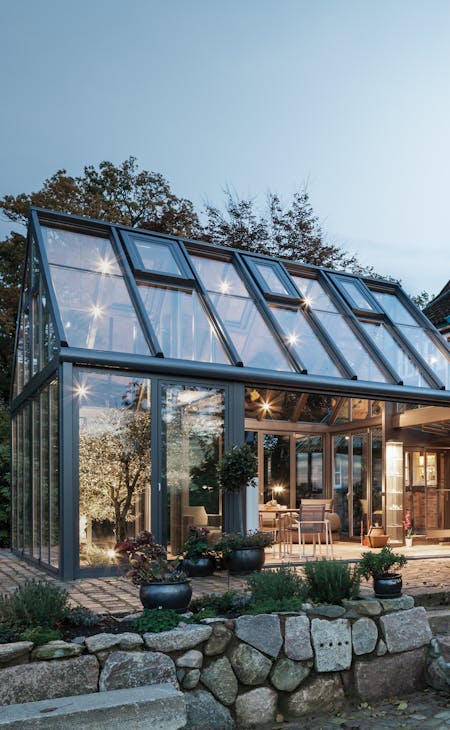
Published October 14, 2025

Ventilation

Ventilation - What It Is and What It Means for Modern Homes

Breathing cleaner, fresher air starts indoors, where proper airflow makes all the difference. At Solarlux by Reveal, we understand glazing ventilation as a vital component of modern home design.

Adequate ventilation balances fresh air circulation and thermal comfort, improving daily quality of living while meeting updated Building Regulations. With Approved Document Part F now setting the standards for ventilation in new builds and renovations / extensions, it's crucial to consider solutions that provide both style and practicality.

As homes become more airtight, the right ventilation solution is needed to create healthier, more comfortable dwellings that align with today's industry standards.
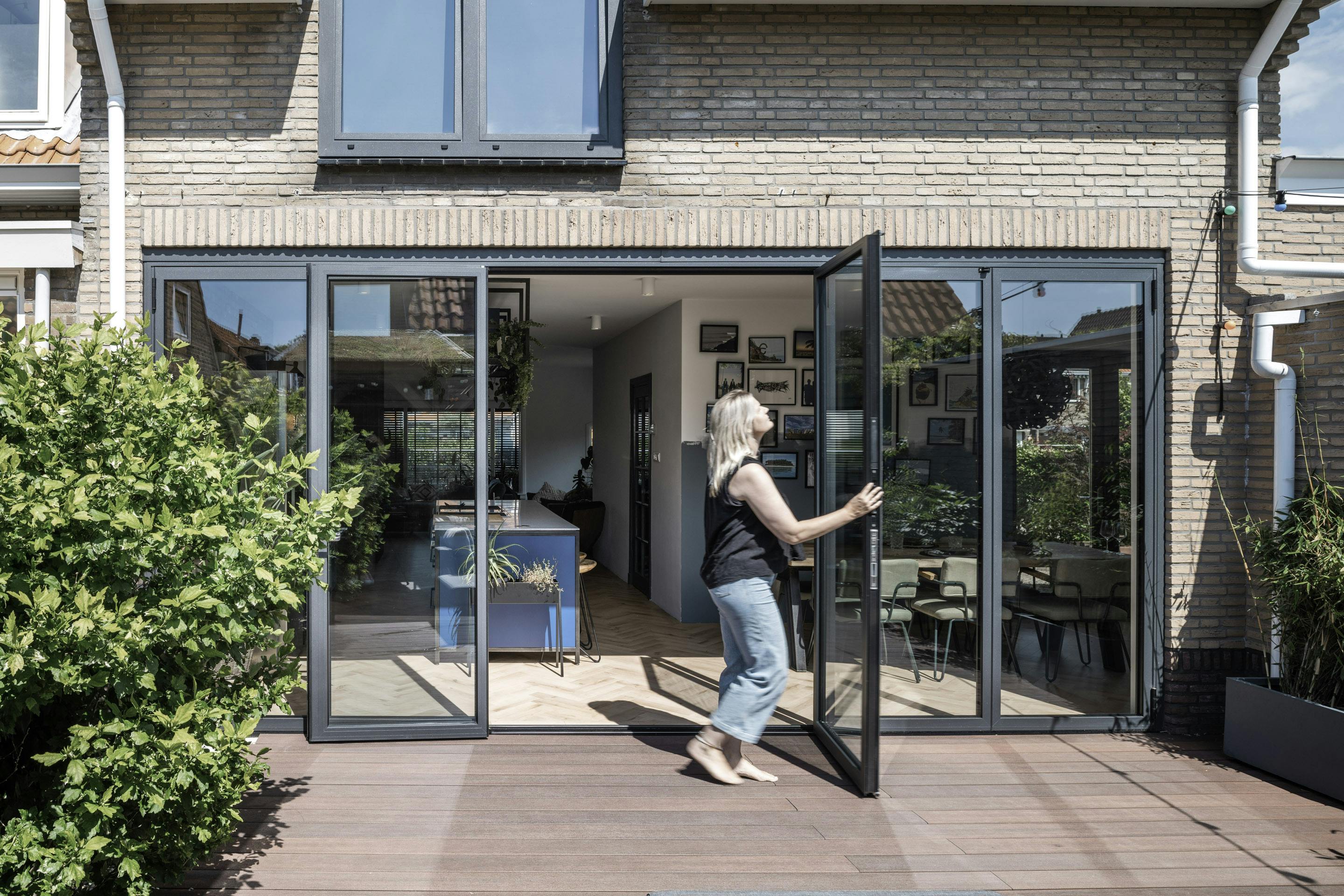
Approved Document F Explained

Approved Document F outlines standards for building ventilation and maintaining good air quality. This guidance highlights the importance of adequate ventilation to minimise moisture buildup, which can impact a building's structural integrity. Common practices to achieve compliance include installing extractor fans, incorporating MVHR systems (Mechanical Ventilation with Heat Recovery), or using opening windows and trickle vents.

Looking at New Dwellings and Existing Dwellings as they are treated differently in Approved Document F.

New Dwellings

It allows for three types or systems of ventilation for new build dwellings:

System 1 is referred to as Natural Ventilation and allows for background ventilation to be used (trickle vents). This can only be used in dwellings regarded as less airtight.

Less airtight is defined by:

a) Calculation at design stage with air permeability higher than 5 cubic metres of air per hour per square metre of floor area at 50 pascal of pressure. (5m³/hm² at 50Pa)

b) Established by air tightness test after build as higher than 3 cubic metres of air per hour per square metre of floor area at 50 pascal of pressure. (3m³/hm² at 50 Pa)

System 2 is continuous mechanical extraction and allows for a minimum of 4,000mm² equivalent area of background ventilators for each habitable room.

System 3 is a mechanical ventilation system with heat recovery and has no provision for background ventilators.

Room Type Minimum Equivalent Area of background ventilators for dwellings with multiple floors Minimum Equivalent Area of background ventilators for single storey dwellings

Habitable Room

8,000mm2 EA

10,000mm2 EA

Kitchen

8,000mm2 EA

10,000mm2 EA

Utility Room

NO MINIMUM

NO MINIMUM

Bathroom

4,000mm2 EA

4,000mm2 EA

Sanitary Accommodation

NO MINIMUM

NO MINIMUM

Purge Ventilation

Is also required for New Dwellings in Document F:

  • Manually controlled ventilation at a relatively high rate to enable rapid dilution of pollutants and/or to disperse water vapour
  • Can be provided by natural means (e.g. an openable window) or by mechanical means (e.g. a fan).
Opening type Minimum total area of openings

Hinged or pivot windows with an opening angle of 15 to 30 degrees

1/10 of the floor area

Hinged or pivot windows with an opening angle of more than or equal to 30 degrees

1/20 of the floor area

Opening sash windows (sliding)

1/20 of the floor area

External doors

1/20 of the floor area

Existing Dwellings

So this would be an extension or replacement windows and doors:

Existing windows with background ventilators (trickle vents)

If the existing windows have background ventilators, the replacement windows should include background ventilators.

The new background ventilators should comply with both of the following conditions:

  • Not be smaller than the background ventilators in the original window
  • Be controllable either automatically or by the occupant

Replacing existing windows without background ventilators (trickle vents)

  • Replacing the windows is likely to increase the airtightness of the dwelling.
  • If ventilation is not provided via other means then increasing the airtightness of the building may reduce the beneficial ventilation.

In these circumstances, it is necessary to ensure that the ventilation provision in the dwelling is no worse than it was before the work was carried out.

Where no other means of ventilation are present replacement windows and doors should have:

  • Habitable rooms - minimum 8,000mm² equivalent area (EA)
  • Kitchen - minimum 8,000mm² equivalent area (EA)
  • Bathroom (with or without a toilet) - minimum 4,000mm² equivalent area (EA)

(There are some circumstances where this doesn't apply)

Installing replacement windows & doors where other means of ventilation exist

  • If the dwelling will have continuous mechanical extract ventilation, install background ventilators in any replacement windows with a minimum equivalent area of 4,000mm² in each habitable room
  • Other ventilation provisions may be used if it can be demonstrated to a building control body that they comply with the requirements

If it is not technically feasible to adopt the minimum equivalent areas set out above, the background ventilators should have equivalent areas as close to the minimum value as is technically feasible.

What Are Trickle Vents

Trickle vents are small openings integrated into window and door frames (utilising a head extension at the top) that allow a continuous flow of fresh air into your home. By offering constant background ventilation, trickle vents help to regulate airflow and maintain air quality.

The vent consists of a narrow slot in the frame's head extension with a cover inside your house that can be manually opened or closed to control the level of airflow and a fixed canopy outside incorporating an insect mesh or similar. Trickle vents help prevent moisture build-up and reduce the risk of mould growth.

When and Where Trickle Vents Are Required

Background ventilation is needed to comply with Building Regulations specified in Document F as detailed above. Trickle vents are the most common form of ventilation used within glazing systems. When replacing older doors and windows, it's important to consider whether trickle vents are needed to maintain proper ventilation. Because new replacement doors and windows are more airtight than ever, trickle vents will likely need to be integrated into new door and window frames. The placement and use of ventilation is determined by specific criteria based on the property's ventilation system and existing conditions:

  • Homes with mechanical ventilation and heat recovery systems - These properties are built to be highly airtight, and ventilation is managed entirely through mechanical systems. Trickle vents are not necessary in these homes
  • Homes with continuous extract ventilation systems - These systems use a mix of mechanical and natural airflow to sustain air quality. Trickle vents must be included to support this balanced ventilation approach
  • Replacement of windows in properties without trickle vents - When replacing such windows, it's essential to confirm that the new windows do not increase airtightness. In most cases, the new windows must include trickle vents
  • Replacement of windows in properties with existing trickle vents -New windows in these properties must feature ventilation window options with trickle vents that are at least equivalent in size to the original ones. Larger vents may also be considered

Discover Seamless Glass Ventilation Solutions for Your Home

Some worry that trickle vents might compromise the sleek, glass-centric appearance of modern windows, but this isn't the case with the advanced glazing products here at Solarlux by Reveal. Our bespoke systems and contemporary designs integrate trickle vents directly into the frame profiles, creating a streamlined aesthetic while maintaining full compliance with Building Regulations.

From sliding doors and windows to glass extension ventilation, our industry-renowned quality and expertise will help you meet all the necessary requirements while giving your home a boost in efficiency, value, and visual appeal.

Contact us today to explore our exceptional range of glass products and ventialtion solutions, and to find out how we can help transform your home.

Can We Help You?

Share this Technical Page

More Technical Pages from Solarlux by Reveal

Loading more articles. Please wait

Our Contact Details

Product display
(by appointment only)

We always like to book 2-hour appointments at our premises to allow you to fully appreciate our products and give you the time to ask as many questions as you wish.

Leigh House, Varley Street,
Pudsey, Leeds, West Yorkshire
LS28 6AN

Opening Hours

Monday-Friday 8.30am-4.30pm

Saturdays by appointment only

Closed Sundays